Perth summers are legendary for a reason – sizzling days and oven-like nights are just part of the package. You’ve walked in after work, opened the door, and felt instant regret. Sound familiar? That’s when a portable evaporative cooler can be your personal oasis. Also known as a “swamp cooler,” it uses water evaporation (not a fridge cycle) to drop air temperature. In our hot, dry climate, a well-used portable evaporative cooler can drastically improve comfort without guzzling power. In this guide, we’ll dive into Perth’s climate, explain how these coolers work, and share pro tips so you can squeeze every bit of chill out of your unit – saving you money and sanity this summer.
Why Perth’s Hot, Dry Climate Suits Evaporative Cooling
Unlike Brisbane or coastal cities, Perth’s summer air is bone-dry. Bureau of Meteorology data shows Perth’s 3pm relative humidity averages around 39% in January – perfect conditions for water to evaporate and cool. In plain terms: the air in your home is thirsty. Evaporative coolers love that. CHOICE notes swamp coolers are “most effective in hot, dry climates with low humidity”. In Perth’s sunshine, they can sing. As one local expert put it, Perth is “basically sunshine’s biggest fan – we have blazing-hot, very dry summers”, meaning your evaporative cooler really gets to work. (And that extra moisture? Many Aussies find it feels like a nice mist on skin and sinuses after our Sahara-like heat.)
Perth’s weather stats show the city rarely breaks a sweat with humidity, especially in mid-summer. Even at 3pm in peak heat, relative humidity hovers in the high 30s to low 40s. That’s ideal for evaporative cooling: dry air eagerly absorbs water vapor, so the breeze from your cooler will drop several degrees. (Contrast that with muggy Queensland summers, where high humidity would make an evaporative cooler much less effective.)
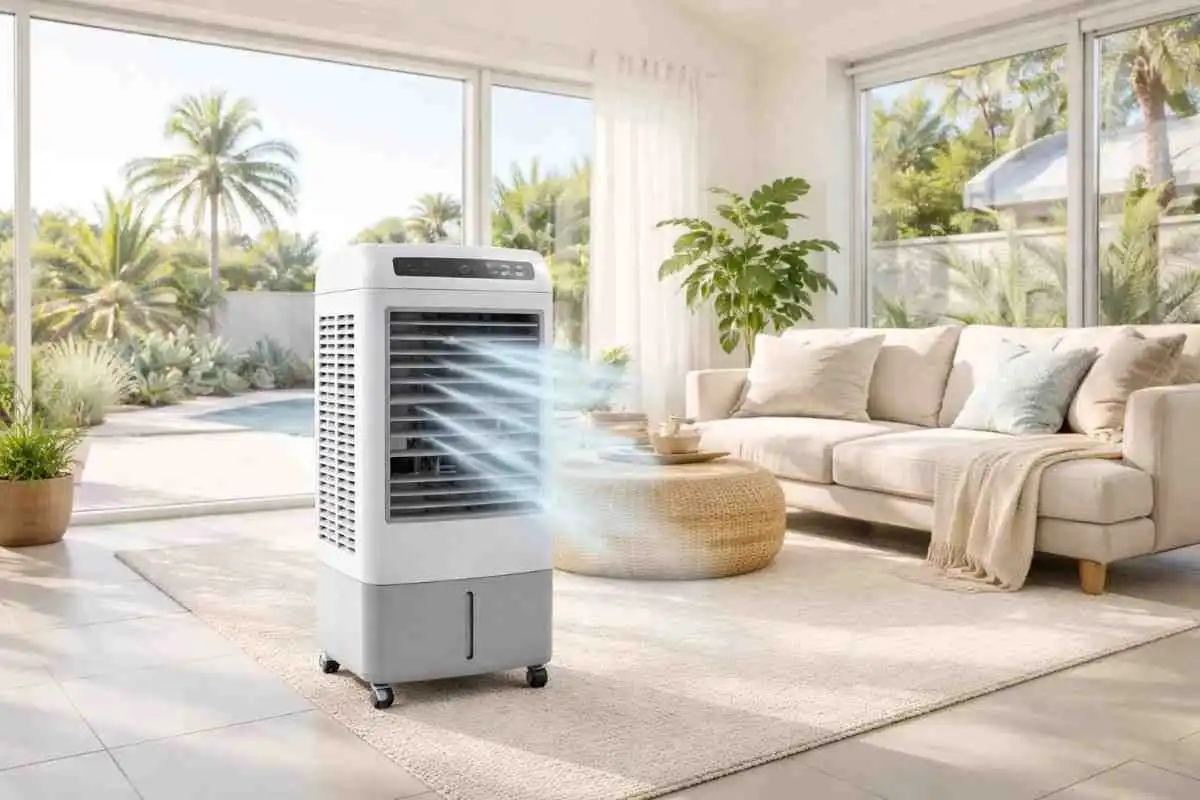
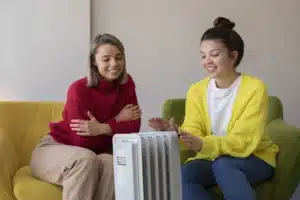
Insert image of a portable evaporative cooler under the Perth sun here. The picture above shows a typical portable evaporative unit in action. It’s essentially a big fan blowing air through a wet cooling pad. As outside air passes over the water-soaked pad, the water evaporates and cools the air. This misty cool air is then blown into your room. Because of our dry climate, that evaporation happens very efficiently in Perth. In fact, the Australian energy authority explains that evaporative coolers work by “blowing air over a film of water on a filter… the outside air is drawn through the unit… cooling it via evaporation”.

How a Portable Evaporative Cooler Works
At its core, a portable evaporative cooler is simple: just fan + water. When you switch it on, a pump keeps the cooling pad (often a wet sponge or cellulose filter) drenched, and a fan pulls warm air from outside through that pad. The heat in the air makes the water evaporate, which absorbs energy and cools the air. The now cooler, humid air is sent into your room. Think of it like an indoor misty breeze.
The magic (and the catch) is that it adds humidity. Perth’s air can handle it, but you must let the moist air escape somewhere. The governmental Energy.gov.au guide advises that the cooled air pushes hot indoor air “through open windows and doors”. In practice, that means whenever your cooler is running, keep a door or window ajar (ideally on the opposite side of the house) so the warm, humid air has somewhere to go. If you don’t, the indoor air will get muggy and the motor’s heat will actually start to make your room warmer – essentially undoing the cooling. In summary: always provide an outlet for air flow so fresh dry air can circulate, just like the experts recommend.
Because there’s no compressor, power use is low. Most household coolers run on only a few hundred watts (just the fan and pump). This means they’re far more energy-efficient than typical air conditioners (even if they don’t reach as chilly a temperature). We’ll cover the cost savings next, but first – let’s make sure you’re squeezing the most cooling out of the cooler you already have.
Maximizing Cooling from Your Portable Evaporative Cooler
Get ready to turn up the chill. Follow these tips to ensure your cooler really earns its keep:
- Place it right. Position your cooler near an open doorway or window. This way it can pull in that fresh outdoor air easily. For example, aim the unit at an open front door so it sucks in the dry breeze from outside and blows the cool air inwards. Always have at least one door or window open for exhaust (as recommended by guides).
- Fill it with cold water (or ice!). Start with the coolest water you can. Some units have compartments for ice packs – use them on really scorching days. Chilled water means even cooler vapor. (Just monitor the water level; melting ice will raise the tank level.)
- Keep the pads wet and clean. Before you fire it up, make sure the cooling pad or sponge is fully soaked. A dry pad doesn’t cool; it just circulates air. Change the pads seasonally (or wash them every month) to avoid salt or mold buildup – fresh pads cool faster.
- Give it airflow room. Don’t tuck the cooler in a corner. Place it in an open area so it can distribute air freely around the room. If you have a large space, consider moving it every few hours to another hot spot, or use multiple smaller coolers for different rooms.
- Use fans to circulate. Augment your cooler’s blast with ceiling or tower fans. Fans don’t cool air, but they move it – which in our case means more of that chilly mist reaching all corners of the room. Aim a ceiling fan to pull air up; this helps push out warm air.
- Run it early or late. Take advantage of cooler outdoor temperatures. Turning on the cooler in the evening or morning can help reduce the overall temperature indoors. For instance, switch it on after sundown to gently chill the house, then close up windows and curtains overnight to trap the cool air. When the mid-afternoon heat arrives, crank it up again.
- Limit heat sources. Close curtains on sun-facing windows and try to avoid using ovens or heavy appliances during peak heat. The less hot air your cooler has to fight, the better it performs. In a sense, treat your cooler like a tea-cooling fan: keep it away from new heat loads and it works best.
With these tweaks, your portable evaporative air cooler will truly shine. Many Perth households report that after optimizing placement and airflow, their coolers feel several degrees more effective.
Energy-Efficient Cooling in Perth
Here’s the real kicker: portable evaporative coolers are incredibly energy-efficient. Because they only run a pump and fan, they sip electricity – often just 200–400 watts for typical units. That’s tiny compared to a 1 kW air conditioner. BMS’s own analysis (citing industry estimates) finds a whole-house evaporative cooler might cost only $200–$300 per year to run, while a comparable medium split-system AC would be more like $400–$500 per year. Another Aussie calculation breaks it down: roughly 10¢/hour for an evaporative cooler (plus ~2¢ for the water) versus about 60¢/hour for a reverse-cycle AC. Put simply, running that AC can cost three times more than the swamp cooler here in Perth.
And don’t forget water: yes, your cooler will drink water (often tens of liters per hour in Perth heat), but water is cheap compared to power. If you’re on scheme water, that’s pennies, and if you have a rain tank or reuse strategy, even better.
In practice, this all means two things. First, your power bills should stay low on hot days – a welcome relief when every extra degree of cooling can mean an extra 10% on your energy bill. Second, you’re getting very green cooling: no refrigerants, no compressors, just water and air. Perth’s electricity is increasingly green anyway, so adding a portable energy-efficient cooling Perth solution is an eco-friendly move.
Keeping Your Cooler in Top Shape
Nothing kills a breeze faster than a grubby cooler. Dirty pads, stagnant water, or clogged filters can turn your fan into a heater. Thankfully, maintenance is straightforward. In fact, health authorities advise it: WA Health recommends draining and cleaning your portable evaporative cooler at least once during the hot weather, and leaving it dry when not in use. Here’s how to stay on top of it:
- Drain and scrub mid-season. Pick a quiet weekday and empty out the reservoir. Scrub the sump (the water tray) with soap or a diluted bleach solution to kill algae. Rinse thoroughly.
- Dry it out. After cleaning, let the cooler sit unplugged with the drain open so all surfaces can air-dry. This prevents any bacteria or mold from growing in the damp interior.
- Wipe or replace pads. Remove the filter pads and hose them down. If they’re falling apart or stained, swap them for new ones. Clean pads absorb water better and cool more efficiently.
- Use clean water. If you have hard tap water, consider filtering or using rainwater. Mineral buildup on pads and in the pump can reduce performance.
- Check vents and fans. Vacuum or brush any dust off the intake grill and fan blades. Good airflow into the unit is just as important as airflow out.
A fresh, clean cooler feels noticeably chillier than a neglected one. It also avoids that musty swamp smell. Keep on top of maintenance (even simple tasks like wiping off dust monthly) and you’ll reap cooler air.
According to WA government advice, “portable evaporative units should be completely drained and cleaned at least once during hot weather”. Heeding that saves you the trouble of odor or health issues. After all, you want to cool your home – not grow a science project of bugs!
Government Guidance and Rebates
It’s worth noting that official sources back up what we’ve said. Australian government energy guides point out that evaporative cooling is highly efficient in dry climates. For example, Energy.gov.au highlights that ducted evaporative systems use “less than half” the electricity of a similarly sized reverse-cycle air conditioner. In practical terms, even a portable unit “shoots for the same goal” – slashing bills and emissions while keeping you comfortable.
While there aren’t special Perth-specific rebates just for evaporative coolers, the general push is towards energy-efficient appliances. In Western Australia you can even use federal calculators like the Energy Rating Calculator to compare options. The bottom line is: investing in a good cooler and using it wisely follows both common sense and government advice on beating the heat efficiently.
Conclusion
Perth’s summers don’t have to feel unbearable. A portable evaporative cooler – when chosen and used correctly – can be a cost-effective, energy-efficient way to chill down your home. We’ve seen that Perth’s dry heat is actually ideal for swamp coolers. By placing your unit strategically, keeping it stocked with cold water, ensuring good airflow, and maintaining it regularly, you’ll maximize its cooling power. You’ll save on energy bills (often paying one-third what an AC would cost) and breathe fresher, mist-humidified air – a welcome treat in the outback dry.
Don’t let the Perth heat get the better of you. Whether you’re a landlord, renter, or homeowner in Perth, BMS Air Conditioning can help. Our friendly team knows evaporative coolers inside and out. We can recommend the right model for your space, install it if needed, or give personal tips on setup and upkeep. Ready to stay cool? Contact BMS Air Conditioning today – we’re just a call or click away. Let us keep you comfortable all summer long with smart, efficient cooling solutions.
FAQs
-
Q: Are portable evaporative coolers effective in Perth’s climate?
Yes. A Portable Evaporative Cooler works particularly well during Perth’s hot, dry summer days because low humidity helps water evaporate quickly. Keep a window or door open to maintain airflow and prevent the room from becoming humid.
-
Q: How should I set up a Portable Evaporative Cooler for better cooling?
Place your Portable Evaporative Cooler near an open window or door, aim the airflow into the room and keep another opening available for warm air to escape. Clean pads and fresh water will also improve performance.
-
Q: Does a Portable Evaporative Cooler use less energy than air conditioning?
Generally, yes. A Portable Evaporative Cooler uses power mainly for its fan and water pump, making it an energy-efficient option compared with many refrigerated air conditioners. Actual running costs vary by model and usage.
-
Q: How often should I clean a Portable Evaporative Cooler?
Clean your Portable Evaporative Cooler regularly during summer. Drain and clean the tank, rinse the cooling pads and allow the unit to dry when it is not being used. This helps maintain cooling performance and hygiene.
-
Q: Do I need to open a window when using a Portable Evaporative Cooler?
Yes. A Portable Evaporative Cooler needs ventilation because it adds moisture to the air. Keeping a window or door slightly open allows warm, humid air to escape and helps the cooler deliver better results.
