
When the Perth sun is blazing (40°C feels normal here), a working air conditioner isn’t just a luxury; it’s survival. Imagine you’re chilling indoors, cocktail in hand, when the AC conks out mid-afternoon. Panic? Maybe. Do you grab a sponge or grab your phone to call a tech? Whether you’re a hands-on homeowner or prefer dialing in a professional, we’ll break down DIY vs professional split system aircon service Perth style.
You’ll learn exactly what tasks you can tackle at home and when it’s time to dial a licensed technician, especially under Perth’s unique conditions.
Why Regular Split System Aircon Service Matters
A well-serviced AC is like a friendly mechanic who never ghosts you on road trips. Regular split system aircon service means the unit runs efficiently, lasts longer, and doesn’t guzzle your power bill.
Cleaning an AC can slash energy use by 15–25%. Manufacturers strongly recommend yearly check-ups. In fact, most split system warranties require a documented annual service to stay valid. Skip it, and you risk a warranty kiss-off if parts fail.
Plus, think health: a clean AC delivers fresher air. Perth’s dust and pollen love to settle in idle units. Professional cleaners note that removing mould and grime makes your aircon “work more efficiently” and improves cooling. In short, an annual tune-up is insurance against breakdowns and high bills.
DIY Maintenance: What You Can Do
First things first: DIY split system aircon service means the simple stuff you can safely do yourself. These quick jobs save money and keep the unit in decent shape. Always power off the system before you start! Key DIY tasks include:
- Clean or replace the filters. Think of filters as your AC’s lungs. Dusty filters mean hard breathing. Pop off the front cover and wash the mesh filters with warm soapy water every 1–3 months. Let them dry fully before reinserting.
Pro tip: Mark the date of cleaning on a sticker to remember next time. This one step alone maintains airflow and efficiency. Think of each filter wash as a mini split system aircon service task—it keeps airflow clear until the next full check-up. - Wipe down indoor coils and fins. Over time, the evaporator coil (behind the filter) can gather grime. A gentle vacuum with a soft brush or a foaming coil cleaner can help loosen mild buildup. If you use a foamy cleaner, watch for any runoff some people strap a collection bag or towels to catch water.
A homeowner using a foam cleaner on a split system aircon coil. Proper DIY tools can keep your unit running smoothly. - Clear the outdoor unit. Sprint outside and ensure the condenser coil isn’t jammed. Remove leaves, dust, and any critters from around it. Gently hose down the fins and flush out debris. Also, trim back shrubs so airflow is unrestricted. In Perth, watch for red soil and salt from coastal winds building up on that unit. A quick rinse every few months prevents hidden blockages.
- Check the condensate drain and airflow. The tiny drain pipe can get mouldy or clogged. You can flush it gently with a bit of water or mild bleach solution to keep it clear. Inside, make sure nothing blocks the airflow. Periodically set the fan to high speed for 30 seconds this helps shake loose any water in the pan.
- Thermostat & Remote: Replace old thermostat batteries and double-check your temperature settings. Sometimes the culprit is a dead remote battery, so swap those too. A person pointing an AC remote at the indoor unit highlights why thermostat accuracy matters. Small fixes like fresh batteries can fix strange cooling behavior. Ensuring your thermostat is calibrated correctly will stop odd temperature swings.
These DIY tasks cost very little mostly just your time and a $30–$100 kit of cleaners and won’t void any warranty. They complement a professional service, keeping your system tidy between annual check-ups.
When DIY Isn’t Enough
There’s a line between safe home fixes and trouble. Do not open the refrigerant lines or electrical panels yourself these are jobs for the pros. If you spot ice on the coils, the unit is blowing warm instead of cold, or you hear strange noises, it’s time to call a tech for proper split system aircon service. As one HVAC expert bluntly puts it: DIY maintenance should never replace professional AC service.
By law, any work involving refrigerant must be done by a licensed technician. So if your split system needs a gas top-up, leak fix, or compressor repair, a DIY fix could get you in hot water. Licensed pros use specialized gauges and follow saferules;les you do not want to guess with refrigerant. In short: if it’s beyond filters, hosing, and vacuuming, slow down and call a professional.
Professional Split System Aircon Service
So, what can a licensed tech do for your AC that your sponge can’t? Plenty! Professional technicians bring the tools and know-how for a full split system aircon service, typically including:
- Deep coil and fin cleaning. Pros use high-pressure washers or strong foaming agents and then vacuum the sludge out. They often seal the indoor unit to flush the coil without drenching your room. This thorough clean restores heat-exchange performance far better than a household spray.
- Refrigerant check and charging. Technicians measure the gas charge and inject the correct amount. If levels are low, they test and repair leaks. (Homeowners legally can’t do this.) Proper refrigerant is essential for peak cooling; too much or too little stresses the compressor.
- Electrical inspection. Every wiring connection, relay and capacitor is checked. A loose wire or faulty fan can cause failures. Technicians tighten connections and replace any worn parts. This prevents shorts and breakdowns.
- Performance testing. After servicing, they verify the temperature drop from input to output and ensure the thermostat reads correctly. They’ll also measure airflow. Basically, they make sure the system actually cools before leaving.
- Safety and compliance. Licensed service means all chemicals and methods meet Australian standards. For example, on big systems they follow AS/NZS 3666 for microbe control. Techs wear gloves and goggles, handle cleaning agents safely, and dispose of any contaminated water properly.
Cost and Gear: Professional service is pricier typically around $150–$250 per unit in Perth but includes all of the above. Pros use specialized equipment: e.g. vacuum pumps, hydro-bags, leak detectors and high-pressure washers. Hiring a pro is like renting an industrial AC spa: you pay for the heavy-duty tools and the know-how.
Warranty & Peace of Mind: Going pro also keeps your warranty intact. Many parts cost thousands one avoided breakdown can pay for years of annual tune-ups. As industry experts note, skipping service might save now but often leads to bigger failures. An ounce of prevention is worth a ton of energy bills!
DIY vs Professional Split System Aircon Service: Quick Comparison
To see it side-by-side, here’s a table of what DIY owners do versus a full professional service:
|
Task / Factor |
DIY (Homeowner) | Professional Service |
| Filter Cleaning | Easy (every 1–3 months) just wash filters with water |
Included in service (clean or replace filters) |
|
Coil & Fin Cleaning |
Light (vacuum or mild foam cleaner) | Deep clean (pressure wash + disinfection) |
| Refrigerant Check/Top-Up | Not doable (illegal for homeowners) |
Full refrigerant test and recharge. |
|
Electrical Check |
Basic (visual only) | Complete electrical inspection & tightening. |
| Cost (Per Unit) | Very low |
Moderate |
|
Tools Needed |
Household supplies, vacuum, DIY cleaning kit | Specialized HVAC equipment and chemicals |
| Time Required | Minutes per month (5–10 min/filter) |
1–2 hours per unit |
|
Safety/Legality |
Safe tasks only (no gas/electrical work) | Licensed (RHL) technician handles all chemicals |
| Warranty Impact | Safe (basic upkeep doesn’t void) |
Keeps warranty valid |
|
Effectiveness |
Improves airflow and delays dirt build-up | Maximizes efficiency and longevity through deep care |
This table shows DIY checks keep you in the game, but a professional split system aircon service covers the big-league maintenance you can’t do at home. Whichever path you choose, a mix of your own upkeep and annual pro tune-ups forms a complete split system aircon service routine.
Perth-Specific Considerations (Climate & Alternatives)
Living in Perth, you play the climate game. Long, dry summers and salty coastal breezes mean your AC works overtime. Expect dust storms and tree pollen clogging your filters. If you live near the beach, salt spray can corrode coils. All this stresses the system and makes regular servicing even more important.
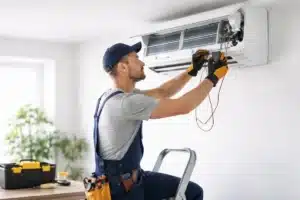
split system aircon service
Timing matters too: aim to service your split system in spring (Sep–Nov) before the real heat hits. Waiting until Dec–Feb can mean booked-out techs and sweatier waiting. I always get mine done in September it means cool comfort when those 38°C days roll in.
In Perth, some also use portable evaporative coolers. These use water-soaked pads to cool the air. A homeowner can maintain an evaporative unit by cleaning its water tank and replacing pads regularly.
However, a portable evaporative air cooler only adds humidity and works best in very dry conditions. It’s cheaper to run but won’t match a well-serviced split AC on extreme days. Heating and cooling play an important role in maintaining indoor comfort. If you have one, keep its pads clean, but don’t skip your regular split system aircon service and maintaining your split system as well.
For whole-home cooling, some houses have a reverse cycle ducted aircon (whole-home system) instead of split units. While our focus is splits, note that ducted systems also need annual servicing .
And if you have a multi split system air conditioner, the DIY vs pro rules are similar: you can DIY the filters on each head, but a pro should service all indoor coils and balance the refrigerant for you.
Conclusion
Stay cool out there, Perth! Book that split system aircon service before the next heatwave hits. I’ll say it again: take care of your AC now, and you’ll avoid a meltdown later. So don’t wait schedule that service today, and your future self will thank you.
In the end, teamwork between DIY care and professional expertise is the winning strategy. Clean filters and clear coils, but let licensed techs handle the heavy lifting each year. This way, you maximize comfort, efficiency, and the life of your system. Trust me, you’ll appreciate the difference when it’s 42°C outside!
Frequently Asked Questions
-
How often should I service my split system aircon?
At least once a year is the rule of thumb for most Perth homes. Busy or dusty environments might need a check twice a year .
-
Can I do my own split system aircon service?
You can handle basic upkeep: wash or replace filters, vacuum fins, and clear debris. But any work on refrigerant or electrical wiring must be done by licensed pros.
-
What DIY maintenance should I do on my split system AC?
Regularly wash or replace the air filters (every 1–3 months) and gently wipe down the indoor coil if visible. Keep the outdoor unit clear of leaves and gently hose it every few months. These simple tasks keep airflow strong and delay dust buildup.
-
What are benefits of a professional split system aircon service?
Professionals thoroughly clean coils, test refrigerant levels, and check all electrical connections. They verify system performance, which catches issues early, boosts efficiency, and protects warranties.
-
Does DIY split system aircon service void my warranty?
No. Cleaning filters and general upkeep won’t void your warranty. In fact, most split system warranties require an annual professional service to stay valid. Just be sure major repairs aren’t attempted DIY, so your warranty remains intact.
-
What is the difference between split system aircon service and servicing other systems?
- Split systems are wall-mounted units, so they allow easy filter cleaning. Other systems involve cleaning ducts and central units, which is more complex and usually requires a pro. Similarly, multi-split systems have multiple indoor heads each filter you can DIY, but a pro should service them all.
- Split systems are wall-mounted units, so they allow easy filter cleaning. Other systems involve cleaning ducts and central units, which is more complex and usually requires a pro. Similarly, multi-split systems have multiple indoor heads each filter you can DIY, but a pro should service them all.
