Maintaining your evaporative cooler is essential to staying comfortable during Perth’s long, hot summers while keeping energy costs under control. Regular servicing helps improve cooling efficiency, extends the system’s lifespan, and ensures clean, healthy airflow throughout your home.
For homeowners relying on evaporative cooler Perth solutions, simple maintenance steps like cleaning pads, checking water distribution, and seasonal inspections can make a noticeable difference in performance. By understanding the right care routine for your evaporative cooler Perth system, you can enjoy reliable cooling, fewer breakdowns, and consistent comfort when you need it most.
Stay Cool Down Under: Why Your Evaporative Cooler Needs Love
Ever come home after a scorcher of a day in Perth? For an evaporative cooler Perth owner, you know that this trusty sidekick can turn brutal heat into a breeze. A clean evaporative cooler Perth almost feels like magic on a 40°C night. Let it clog up, though, and you’re chasing sweaty dreams.
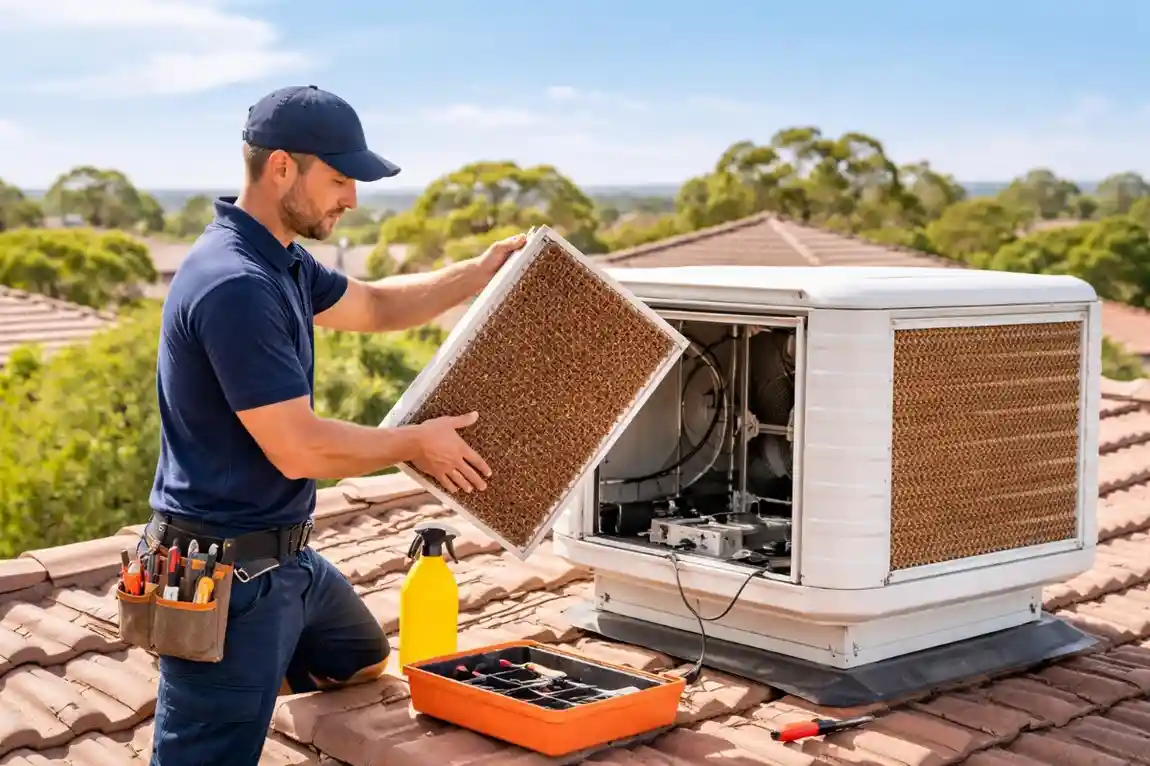
A suburban Perth rooftop evaporative cooler ready for the summer.
These units work by evaporating water through big wet pads, blowing the cooled air into your home. That means maintenance is key: old dust, grimy pads or blocked pipes can make your evaporative cooler Perth wheeze like a marathon runner.
Worse, neglect can hike your power bill and even shorten the unit’s life. By spending a bit of time on TLC (tender loving cleaning), you save heaps on energy and dodge costly repairs later.
Pre-Summer Sparkle: Your Evaporative Cooler Perth Checklist
By late spring, Perth’s sun is flirting with 40°C. That’s your cue to give the cooler a spa day. Here’s your spring fix-it list, so your evaporative cooler Perth won’t let you down when the mercury rockets:
- Empty and Flush the Water Tank: Drain all old water and rinse the reservoir. Stale water breeds algae and mineral gunk. A quick flush with a hose washes away sediment and keeps water flowing smoothly.
- Clean or Replace Cooling Pads: Pads are the heart of your swamp cooler. Inspect them for wear or slime. If they look crusty or clogged, swap them out. In WA we recommend cleaning these pads and replacing them about once a year.
- Inspect Pump & Nozzles: Turn on the pump and check the flow. You should hear a gentle hum and see even water spraying on the pads. If it sputters or your pads only half-soak, clear any blockages in the pump or nozzles. Flushing the lines a couple of times a year keeps the system flowing.
- Check Ducts and Windows: Make sure all vents and louvers are open. Evap coolers push air out through ductwork, so blocked vents can choke the system. Also, plan to leave a window or two cracked when the cooler runs. It lets the hot air escape, keeping the airflow fresh (evap coolers need fresh air, not a sealed house).
- Cover Up in Winter: After summer, drain the unit completely and throw on a cover or tarp. Even Perth’s mild winter can dip below 0°C. Frozen water can crack parts or rust components. A cover keeps out dust, leaves and critters too. Doing this off-season prep means day one of next summer is already set.
Here’s a quick maintenance checklist to keep handy:
|
Task |
Frequency | Why It Matters |
|
Clean/Replace Pads |
Pre-summer (annually) |
Keeps airflow up; avoids mold/mineral build-up |
|
Flush Water Tank & Lines |
Pre-summer (annually) | Removes sediment; prevents pump clogs |
| Inspect Pump & Nozzles | Pre-summer (annually) |
Ensures consistent water flow; prevents pump failure |
|
Lubricate Motor & Bearings |
Off-season (winter) | Reduces wear; keeps fan motor running smoothly |
| Cover Unit for Winter | Post-summer (off-season) |
Protects from frost and dust |
| Check/Adjust Float Valve | Pre-summer |
Prevents overflows and leaks |
For extra peace of mind, local Perth pros like Airspares recommend a professional inspection once a year. A technician will verify the basics and catch any hidden issues before summer hits.
Mid-Summer TLC: Running Your Evaporative Cooler Perth Smooth
During peak heat, keeping your evaporative cooler Perth happy is essential for constant breezes. Once you’re into Perth’s peak summer, it’s about keeping the airflow steady and clean:
- Keep an Eye on Water Level: Your cooler’s float valve should keep the pads just soaked. If water spills out or runs dry, adjust the valve setting. (Tip: after filling, give the tray a minute if it’s overflowing later, lower the valve a notch.)
- Top Up and Treat the Water: Perth’s tap water is fairly clean, but hard-water minerals still build up over time. Consider adding a drop of evaporative cooler biocide or scale inhibitor (available at hardware stores) once a month. It sounds fancy, but it’s just about preventing slime and lime-scale.
- Clean Mid-Season if Needed: If you’ve had a dust storm or pollen burst (Perth’s spring can deliver big winds), give the pads a rinse mid-season. A quick scrub with a brush or a soak can shave a couple of degrees off the output. I did this last February after a dusty week, and felt a noticeable difference.
- Check Airflow: Look at the intake vents and ducts for debris sometimes leaves or even lizards sneak in. A brief vacuum or brush around the duct openings prevents your cooler from choking on surprises.
- Don’t Block Your Windows: You want fresh air exchange. If you seal up the house like a fridge, the cooler has no place to push the hot air out. Keep windows or a door cracked, even on windy nights. It sounds odd, but it makes the indoor cool air feel much stronger.
- Mind the Humidity: Perth’s climate is usually dry, which is perfect for evaps. But if an unusual humid front rolls in (or if your air feels sticky), note that evaporation becomes less effective when humidity is high. If it’s above 50% RH, you might feel like the cooler isn’t doing much just turn it off until the air dries out again.
evaporative cooler perth
Your evaporative cooler Perth should be humming along nicely. Every now and then, take a sniff and a quick listen: the air should smell fresh and cool, with a gentle fan whir.
If anything sounds unusual or smells musty, it might be time for a quick rinse or water change.
Winter Shutdown: Off-Season Care for Your Evaporative Cooler Perth
Summer’s wrap-up is as important as its kick-off. Before you put the cooler to bed, remember these final steps:
- Drain thoroughly: Tilt and drain until every last drop is out. Check all corners of the tank and pipes. You don’t want any puddle left to freeze.
- Final Clean: Give the pads and inside a once-over. A mild bleach or cooler cleaner wipe-down can kill algae or grime. Rinse everything well.
- Remove or Secure Pads: Some people take the pads out to dry; others leave them in. Either way, make sure they’re either bone-dry or completely saturated (half-wet pads in the sun invite mildew).
- Cover Up (Again): Yes, another cover. A well-fitted cooler cover (or sturdy plastic sheet) keeps spiders, leaves and dust out. If your roof is prone to debris, this is a must.
- Turn Off Water Supply: If your cooler is plumbed, shut off the water line or disconnect hoses. That way, any inadvertent leak during winter won’t flood your rafters.
- Plan Next Season’s Service: Mark your calendar for early spring. Getting into the habit of off-season shut-down means Spring startup is quick. Better yet, schedule a pro service for next year so they remind you!
Troubleshooting Common Gremlins
Even a well-loved cooler can throw a tantrum. These quick fixes can often get you back on track without a technician:
- Warm Breezes Instead of Cold: Usually means a clogged pad or pump issue. Inspect the pads (they should be dripping uniformly). Clear the pump/nozzles and replace pads if needed. Also double-check vents and windows aren’t accidentally shut.
- Weird Smells (Moldy, Sour): That’s stale water or algae. Drain and scrub the tank and pads. Rinse with bleach or use a cooler deodorizer tablet. A dash of lemon in the water tank can freshen it too.
- Water Leaks or Overflow: Check the float valve and water line first. A stuck float can overflow. Ensure the cooler is sitting level; even a tilt can spill one side. If seals or hoses look cracked, replace them before mold takes over.
- Clogged Intake: If you feel almost no airflow, the fan or vents may be blocked. Turn off power and clear visible debris. Tiny animals sometimes nap in there, a good reason to cover in winter!
- Electrical Issues: Buzzing or no power means motor trouble. First, try a reset or breaker. If the fan won’t run, don’t force it; a burnt-out motor needs a pro to replace. Often it just needs a quick lubricant or capacitor swap.
By sorting these easy fixes early, you prevent a full breakdown right when summer really hits. Technical guidance on evaporative air-conditioners helps ensure your system runs safely and efficiently all season long.
And remember, waiting on a 40° day for a repair call is no fun. A stitch in time saves nine or in this case, a quick fix saves a meltdown.
Evaporative Cooler Perth vs Other AC Systems
Alright, I’ll admit I’ve been singing the praises of swamp coolers. Still, let’s be honest—some people are looking at other options, like a sleek new mini-split AC or a multi-split air conditioning system.
Those use refrigerant and work fine in humidity (and they have their own filters to clean). Heck, on mega-hot days a refrigerated AC feels great.
But each system needs care. Mini splits and multi-splits require filter cleaning (usually monthly) and eventual refrigerant checks. In contrast, our evaporative cooler Perth unit is simple: water in, air out. And it’s far cheaper to run.
For example, a properly maintained evaporative cooler Perth can use roughly 75% less power than a conventional AC. The catch: it adds humidity, so it suits dry climates (like ours!) best.
What about an industrial evaporative cooler? That’s basically a swamp cooler on steroids for big spaces. Same rules apply: big pads, big water tank, same cleaning needs, just scaled up. So even if you see those giant fans in warehouses, the maintenance logic is identical to your home unit.
In short, keep your cooler in top shape and it’ll keep you cool. It’s your seasonal sidekick, treat it right, and it’ll reward you with long, reliable, eco-friendly cooling (and a win for your hip pocket).
Conclusion
Maintaining your evaporative cooler Perth is really just a few simple habits: keep it clean, keep it filled, and keep it covered when not in use. Do that, and you’ll enjoy cool breezes, healthier air, and a lighter power bill. Now go pop that cover off, top up the water tank, and reward yourself you’ve earned some ice-cold lemonade.
Ready to chill? Follow this guide each season and your evaporative cooler Perth will breeze through the hottest summers. Got a tip or story about your cooler (or your evaporative cooler Perth adventures)?
FAQ
-
How often should I service my evaporative cooler in Perth?
Aim for an annual tune-up before summer (around early spring). Local pros recommend servicing at least once a year. If you use it hard, consider a mid-season check too.
-
Do I need to cover my evaporative cooler in winter?
Yes – drain it and cover it after summer. Perth can get chilly, and a cover keeps out dust and pests while protecting parts from frost.
-
Can I leave my cooler on all night?
Sure, if it’s working right and water is topped up. Fresh air makes it more efficient, so leave a window cracked. (If rain’s forecast, turn it off.) Always switch it off if it starts sounding weird or water is overflowing.
-
Evaporative cooler vs mini-split – which is cheaper to run?
An evaporative cooler Perth setup wins hands-down in electricity in our dry climate. Mini-splits are powerful (and handle humidity) but sip more power, meaning much higher bills.
-
Why is my evaporative cooler not blowing cold air?
Common culprits: clogged or old pads, low water level, or blocked airflow. Check that the pump is running and the pads are fully wet; also ensure your vents/windows aren’t shut. Addressing these usually brings back the chill.
-
What is an industrial evaporative cooler?
Think of it as a giant swamp cooler for big venues (warehouses, farms, etc.). It works the same way: water-soaked pads, a fan, etc. The maintenance is similar to home units cleaning or replace the pads, keep water flowing and cover it up just on a larger scale.
